Recent blog posts

  • By Jillian Frost Kalyan, Esq.

    If you’re a parent in New Jersey, you might be wondering at what point you're no longer legally responsible to support your child: specifically, how much longer you have to pay child support. This is where the concept of emancipation comes into play. It’s a term that gets tossed around, but many people don’t fully understand what it means or how it works in our state.

    What Is Emancipation?

    In simple terms, emancipation is the legal process by which a child is declared independent from their parents. Once emancipated, a parent is no longer obligated to provide financial support for that child. But here’s the key: emancipation in New Jersey doesn’t automatically happen when your child turns 18.

    It’s true, turning 18 does not mean your child is legally emancipated. In fact, under New Jersey law, child support can continue well into a child’s 20s if they’re still in school or otherwise dependent.

    When Does Emancipation Happen?

    Like with most things in the divorce and post-divorce process, there’s no one-size-fits-all answer. Courts in New Jersey look at emancipation on a case-by-case basis. Common situations where emancipation may be granted include:

    • The child turns 19 and is not enrolled in high school or college

    • The child gets married

    • The child joins the military

    • The child becomes financially independent

    • The child finishes a full-time college education

    That also means that if your 19-year-old is still a full-time college student and depends on you financially, the court is likely to deny an emancipation request and keep support in place.

    How Do You Request Emancipation?

    If you believe your child qualifies to be emancipated, your lawyer will need to file a formal application with the court. This is often done as part of a motion to terminate child support. In your  motion you’ll need to demonstrate that the child is no longer dependent on the support of his or her parents, either because they’re financially independent, married, or another qualifying reason.

    The court may schedule a hearing, review supporting documents (like school transcripts or financial records), and listen to arguments from both parents before making a decision.

    Automatic Termination of Child Support at Age 19

    As of February 2017, New Jersey law says that child support can stop when a child turns 19 unless there is some reason why support should continue. The most common reason child support continues is because the child is still in high school or enrolled in college full time. Support can continue until age 23 in some cases, but it won’t go beyond that without a court order for exceptional circumstances.

    Why It Matters

    Whether you’re paying or receiving support, planning ahead is critical and understanding emancipation is an important part of that plan. Emancipation is to ensure that support arrangements are fair and reflect your child’s current status

  • By Jillian Frost Kalyan, Esq.

    Going through a divorce can feel overwhelming, especially if you don’t know

    what to expect. Knowing the basics can make the process more manageable

    and even help you make more informed decisions.

    First things rst: New Jersey is a "no-fault" divorce state. That means you

    don’t have to prove wrongdoing like adultery or abuse. Instead, most people

    le for divorce because of "irreconcilable di'erences," which simply means

    the marriage has broken down and can’t be repaired.

    To le for divorce in New Jersey, at least one spouse must have lived in the

    state for at least a year. The process starts with a complaint for divorce led in

    the county where either spouse lives. From there, the other party will be

    served with legal notice, and they will be a'orded a period of time to le an

    Answer.

    Key issues that must be resolved include division of assets and debts, child

    custody and parenting time (if children are involved), child support, and

    potentially spousal support (alimony). These matters can be settled through

    negotiation, mediation, or, if necessary, litigation (going to court).

    Some married people are able to do so by themselves, sitting at the kitchen

    table. Some need lawyers to speak and advocate on their behalf, or simply

    guide them through the discussions. Many couples nd themselves coming to

    an agreement through mediation with a third party (also usually a lawyer).

    Very few will need to have a Judge decide the issues through a divorce trial.

    New Jersey Courts have an interest in you and your spouse resolving the

    issues in your divorce yourselves, without a Judge. There are many people

    getting divorced and not many Judges to hear their cases, costing the parties

    time and money. As a result, every divorce process has built-in required pit

    stops designed to help the parties reach a settlement agreement. This

    includes appearance before an Early Settlement Panel, custody and parenting

    time mediation, economic mediation, and Intensive Settlement Conferences.

    Among and during these pit stops, spouses may also engage in discovery, or

    the process of collecting information (usually nancial) from each other. If

    necessary, the attorneys may hire expert witnesses to evaluate parts of the

    case and form an opinion. These experts might look at custody and parenting

    time and make a recommendation about what is in the children’s best

    • interest, or they might be a nancial expert whose job it is to evaluate a

      business to learn its value or income. The information collected from these

      experts can help negotiations, or be presented in court as evidence.

      No two divorces look the same. Ask any friend or relative about their divorce,

      and everyone’s story will be di'erent. Some are quick and amicable; others

      are more complex and contentious. In every case, knowledge is power, and

      understanding the basics is critical.

  • By Jillian Frost Kalyan, Esq.

    Divorce can be a long and emotional process, but life doesn’t pause while you wait for a divorce judgment. The bills still need to be paid, the groceries still need to be bought, the kids still need to get to school, and financial responsibilities don’t magically stop. That’s where pendente lite support comes in.

    If you're going through a divorce in New Jersey, understanding pendente lite support is crucial, especially if you or your spouse (like most people) relies on the other for financial help.

    What Does “Pendente Lite” Mean?

    “Pendente lite” is a Latin term meaning “while the litigation is pending.” In divorce cases, it refers to temporary support ordered by the court while the divorce is ongoing. This can include temporary alimony (spousal support), temporary child support, or both depending on your circumstances.

    The goal? To maintain the financial status quo so neither party is unfairly disadvantaged during the process.

    Who Can Request It?

    Either spouse can request pendente lite support. Typically, it’s requested when one party doesn’t have access to enough money to pay basic living expenses, legal fees, or support children during the divorce. The idea is to provide financial stability until the court can make permanent decisions in the final divorce order.

    How Is the Amount Determined?

    Courts in New Jersey look at several factors when awarding pendente lite support, such as:

    What Does It Cover?

    Pendente lite support may include:

    • Temporary alimony to help cover rent, groceries, utilities, etc.

    • Child support for food, clothing, medical care, and education

    • Contribution toward legal fees (if one spouse can't afford a lawyer)

    • Housing expenses, especially if one spouse has moved out

    It’s not meant to be a long-term fix, but it’s a lifeline that keeps things running while the divorce works its way through the court system.

    How Is the Amount Determined?

    Courts in New Jersey look at several factors when awarding pendente lite support, such as:

    • The income and assets of both spouses

    • Monthly expenses and lifestyle during the marriage

    • Whether one spouse is financially dependent on the other, or if both spouses contribute to monthly expenses

    • The needs of the children (if any)

    The court may also use the New Jersey Child Support Guidelines when calculating temporary child support. For alimony, the “calculation” is more discretionary and fact-specific. In pendente lite support, the judge’s goal is to prevent financial hardship during the proceedings.

    How Do You Apply?

    To request pendente lite support, your attorney will file a motion with the court. This motion includes detailed financial information, such as income, expenses, and a proposed budget. The other spouse will have the chance to respond, and the court may hold a hearing before issuing a temporary order.

    Why It Matters

    Divorce doesn’t happen overnight, and for many families, the time between filing and final judgment can last months or longer. Pendente lite support helps keep the household and family functioning by ensuring both parties can meet their basic needs during that time.

    If you’re facing a divorce and have concerns about your financial situation, don’t wait. The longer you go without pendente lite support, the harder it is to get.

  • By Jillian Frost Kalyan, Esq.

    Holidays with children after a divorce can feel like unfamiliar territory. Traditions may look different, relationships may shift, and the quiet moments may feel louder than usual. For a lot of people this season already brings a mix of emotions, and those feelings are more compliated on the other side of a divorce or separation. Many feel relief, sadness, hope, and uncertainty often all at the same time. While this transition is undeniably challenging, it also offers an opportunity to rediscover yourself, redefine old rituals, and create meaningful new ones.

    Start by giving yourself permission to feel whatever comes up. Holidays often carry emotional expectations, and it’s normal to grieve the loss of what once was. Instead of forcing holiday cheer, try acknowledging your feelings with honesty and compassion. Whether you're spending time in a new town or your hometown, allow yourself the space to adjust at your own pace.

    Next, consider creating new traditions, big or small, that reflect who you are today. You might plan a “Friendsgiving,” organize a holiday brunch, start a winter hiking routine at a local park, or simply develop a quiet ritual like lighting a candle each evening. Remember new traditions don’t erase the past; they help you move forward with intention.

    Connection is especially important during this season. Reach out to friends, siblings, cousins, or coworkers. Many people assume others are too busy, especially this time of year, but most are happy to share a coffee, take a walk, or meet for holiday shopping. If you’re comfortable, be open about wanting company, chances are you're not the only one navigating a new chapter. Think about how you would act if a friend or family member came to you, and know that you matter to the people who matter to you.

    Treat yourself with care as well. This could mean setting a realistic budget (holidays can tempt overspending), scheduling downtime between gatherings, or taking a social media break if seeing others’ celebrations feels heavy. Remember, your wellbeing matters.

    Finally, let this season be a time of reflection, not pressure. You’ve come through a major life change, and the holidays can be a moment to appreciate your resilience, strength, and growth. Many newly single adults find that the second holiday season feels much more grounded; the first is simply about learning, adjusting, and being gentle with yourself.

    Above all, know that you are not alone. New Jersey is full of vibrant communities, events, and support networks. With time, patience, and openness to new experiences, your holiday season can become not just something to get through, but something that brings peace, hope, and even joy as you build a life that feels authentically yours.

  • By Kate Lyons. Esq.

    One issue you will have to resolve in your divorce is support. This may be for you or your spouse – what we call alimony. It may be for your children – what we call child support. But can you be awarded support before your divorce is finalized? In some cases, yes. While your divorce is pending, it may be appropriate for your spouse to pay you pendente lite support, or PL. This is temporary support during the period that your case is pending. It may also be appropriate for your spouse to pay child support, if you have children.  

                Importantly, PL and child support are not appropriate in every situation. These types of support may also not be helpful in every situation. For example, if you and your spouse continue to reside together in your marital house, with you each contributing toward your family’s expenses, it may not be necessary, appropriate, or beneficial for either of you to pay support. However, if you are living separately, and do not have combined finances from which you are paying household expenses, support may be a necessity.

                If your spouse is not cooperative in coming to an agreement as to PL, you may have to rely upon the Court to decide this issue. You can bring this issue to your Judge’s attention by filing a PL Motion. In a PL Motion, you will need to provide the Court with specific information as to what you want and why you want it. This includes why it is necessary for the support you are requesting. Our Court Rules require that you file a Case Information Statement (or CIS) with your motion to enable the Judge to review your financial circumstances. The Judge will evaluate the factors listed in N.J.S.A. 2A:34-23 in deciding whether support is appropriate and, if so, what amount is warranted. To help the Court in Its analysis, you should provide facts in your case that apply to these factors.  

                Once you file your motion, you will need to also serve your spouse with a copy. They will have an opportunity to respond to your motion, as well as to raise any issues they feel require the Judge’s input. You will then have an opportunity to respond to these new issues in the form of a reply.

                If you or your spouse request oral argument, the Judge may decide to schedule your motion for a hearing. At the hearing, the Judge will give you and your spouse an opportunity to argue in support of what you are seeking. The Judge may decide that your respective motions provide sufficient information with which to make a decision and decline to schedule oral argument. If neither you nor your spouse requests oral argument, a hearing will not be scheduled. After the hearing, your Judge will reach a decision in the form of an Order. The Order may grant your request in its totality. It may grant some of what you request, but not everything. It also may deny your requests.

                PL may be a necessity to enable you to make ends meet while you are working toward a resolution. We can help you seek appropriate support. Please contact our office to schedule a consultation to discuss how we may help you obtain PL and/or child support.

  • By Jillian Frost Kalyan, Esq.

    High-earning professionals and executives often receive compensation packages beyond a traditional salary. In New Jersey divorce cases, assets such as stocks, stock options, and restricted stock units (RSUs) frequently become central issues in equitable distribution (the division of property). Because these assets can be complex, illiquid, and tied to future performance, understanding how New Jersey courts treat them is essential.

    Identifying Marital vs. Separate Property

    New Jersey follows the principle of equitable distribution, meaning assets are divided fairly, not necessarily equally. The first step is determining whether the stock-based compensation is marital property. Generally:

    • Stocks, options, and RSUs granted and earned during the marriage are considered marital (meaning they are eligible for division).

    • Assets granted before the marriage or after the date of the complaint may be treated as separate property.

    • When awards vest over time, courts often use formulas (similar to a “coverture fraction”) to determine what portion is marital versus non marital (separate).

    Because vesting schedules frequently overlap with the marriage period, clear documentation and expert analysis are often necessary.

    Vested vs. Unvested Awards

    New Jersey courts typically treat vested stock or stock options as marital property subject to immediate valuation and distribution. Unvested awards are more nuanced. Courts evaluate the purpose of the award, such as whether it compensates for past services (marital) or incentivizes future work (potentially non marital). In many cases, judges issue deferred distribution orders, allowing the non-employee spouse to receive their share only if and when the stock vests.

    Valuing Complex Equity Compensation

    Because stocks, options, and RSUs may fluctuate significantly in value, accurate valuation is critical. Forensic accountants or valuation experts often assess:

    • Current market value of stock

    • Fair value of options, factoring in strike price and expiration

    • Projected value of unvested RSUs

    • Tax implications for both spouses

    These analyses help ensure that the final distribution is fair and that neither spouse bears an undue tax burden.

    Protecting Your Financial Interests

    Given the complexity of equity compensation packages, divorcing spouses in New Jersey benefit from legal counsel experienced in high-asset litigation. Properly identifying, valuing, and distributing these assets can significantly impact each party’s long-term financial security.

  • By Kathryn Lyons, Esq.

    If you have a child and are no longer an intact family with the other parent of your child, you may have issues regarding your child’s custody. But what is custody?

                In New Jersey, there are two types of custody – physical custody and legal custody. Legal custody is the right to make decisions regarding your child. You may share legal custody with the other parent, which is known as joint legal custody. In such a circumstance, you and the child’s other parent will be making decisions for your child together. These decisions may include, but certainly are not limited to, where your child attends school, their extracurricular activities, and the medical care they receive. Our law heavily favors joint legal custody as it has been found that it is often in each child’s best interests that both of their parents play a role in decisions made on their behalf.

                Sometimes, it is not appropriate for both you and your child’s other parent to make decisions together. If this is this case, then either you or the other parent will have sole legal custody. This would give one of you the sole right to make decisions on your child’s behalf.

                The second type of custody is your child’s physical custody. This is the amount of time that you each spend with your child, known as parenting time. There are no presumptions that a certain schedule is preferrable over another. If you and the other parent are unable to reach an agreement as to a regular and holiday parenting time schedule, a Judge may make this decision for you. To do so, Judges will evaluate the facts in your case using the factors iterated in N.J.S.A. 9:2-4, such as the parents' ability to cooperate, willingness to accept custody, the child's relationships with parents and siblings, the history of domestic violence, the child's safety, the child's preference (if of sufficient age and capacity), the child's needs, the stability of the home environment, the geographic proximity of the parents to each other, and the quality of the child's education (typically as it relates to public schools), among other issues.

                Generally, it is in your child’s best interests that you and the other parent reach an agreement as to their custody. However, if you are unable to do so, DCS is able to help. Please call our office to schedule a consultation to learn how we may help you resolve custody and parenting time issues regarding your child.

  • By Jillian Frost Kalyan, Esq.May 12, 2025

    Navigating a divorce can be one of the most challenging experiences in life, both emotionally and legally. Among the key elements to consider is the Marital Settlement Agreement (“MSA”), sometimes called a Property Settlement Agreement (“PSA”), a crucial document that outlines the terms of the divorce. Below is an explanation of what an MSA is, its importance, and what to include in it.  When a mediator writes it after mediation, it’s called a  “MOU” -Memorandum of Understanding.

    What is a Marital Settlement Agreement?

    Only a Judge can divorce individuals from the bonds of matrimony, but individuals are free to come to many other agreements on their own instead of having a judge decide.  Many couples figure it out themselves, or with the help of attorneys and/or a mediator.  Once they have an agreement in concept, the written expression of this typically is written into a contract.  A Marital Settlement Agreement is a legally binding contract created between two spouses who are divorcing. It outlines the specific terms regarding various aspects of the divorce, such as division of property, alimony, child support, and child custody and parenting time. The MSA is typically negotiated and drafted during the divorce proceedings, and once signed by both parties, it is incorporated into a Judgment of Divorce and becomes a court order. 

    Importance of a Marital Settlement Agreement

    1. Clarity and Structure: The MSA provides a clear framework for how assets and responsibilities will be divided, reducing ambiguity and potential disputes. By detailing each party’s rights and obligations, it helps both spouses understand their positions moving forward.

    2. Saving Time and Money: By reaching an agreement outside of court, couples can save on legal fees and avoid lengthy court battles. An MSA can expedite the divorce proceed, allowing both parties to move on with their lives more quickly.

    3. Control Over Outcomes: Negotiating an MSA allows couples to have more control over the terms of their separation. Unlike a decision made by a Judge, the MSA reflects the wishes and agreements of both parties, which can lead to more satisfactory outcomes.

    4. Future Implications: The MSA can address future contingencies, such as changes in income or circumstances affecting child custody or support. The forward-thinking approach can help prevent future disputes and ensure that both parties understand their obligations.

    Key Components of a Marital Settlement Agreement

    When drafting an MSA, it’s important to consider the following components:

    1. Division of Assets: Clearly outline how marital property will be divided, including real estate, bank accounts, retirement funds, and personal belongings. It’s crucial to distinguish between marital and separate property.

    2. Debts and Liabilities: Specify how much each party will be responsible for any marital debts, such as mortgages, credit card debt, and loans. Clarity here can prevent disputes down the line.

    3. Alimony (Spousal Support): If applicable, define the terms of alimony including duration, amount, and conditions for modification.

    4. Child Custody and Support: For couples with children, the MSA should detail custody, parenting time (visitation) schedule, and child support obligations. Addressing these issues comprehensively is vital for the well-being of the children involved.

    5. Dispute Resolution: Include a clause outlining how disputes related to the MSA will be handled in the future, whether through mediation, arbitration, or court.

    A Marital Settlement Agreement is a critical document in the divorce process, offering clarity, structure, and control over the end of the marriage. By taking the time to negotiate and draft a comprehensive MSA, and with careful drafting by experienced attorneys or a mediator, couples can reduce conflict and set a clear path for their future. If you’re considering a divorce or need assistance in drafting a Marital Settlement Agreement, consulting with an experienced matrimonial law firm can ensure your interests are protected and your agreement is legally sound.

  • ByJillian Frost Kalyan, Esq.May 5, 2025

    In New Jersey, one of the most sensitive and complex issues that arise in family law cases is moving out of state with a child after a divorce. Whether due to a parent’s job relocation, a desire to move closer to extended family, or for other reasons, when a parent wants to move with a child out of state, it can lead to significant legal complications, especially in cases of divorce or separation. How and when a child can be removed revolves around the child’s best interests, parental rights, and custody arrangements, and the law in New Jersey provides specific guidelines on how these situations should be handled.

    What is Child Removal in Family Law?

    When you move or what to move out of state after a divorce, in legal terms, we refer to this as  “removal.”  This could occur for a variety of reasons, including a new job opportunity, remarriage, or a desire to live closer to extended family. However, the parent wishing to move must obtain approval from the court before relocating, especially if there is an existing custody order in place.

    Legal Implications of Removing a Child from the State

    In New Jersey, both parents typically share the right to make significant decisions about the child’s life, especially when it comes to custody and visitation. If the custodial parent wishes to relocate with the child, they must generally receive permission from the non-custodial parent or, if the non-custodial parent objects, approval from the court. This is because removing a child from the state can significantly affect the other parent’s ability to see the child, have parenting time, and potentially, their relationship with the child.

    Where parents disagree, the law in New Jersey requires that the parent seeking to move with a child file a formal motion with the court. The court will then assess whether the move is in the best interests of the child and whether it will interfere with the parenting time and other rights of the other parent. The court will also consider the reasons for the proposed move and the impact on the child’s well-being.

    Factors the Court Considers

    When a parent wishes to move out of state with their child, the court considers various factors before making a decision. These factors help the court determine whether the proposed relocation is in the best interest of the child. Some of the key factors the court will evaluate include:

    1. The Reason for the Move: The parent seeking the move must demonstrate a legitimate reason for the relocation. A job transfer, remarriage, or desire to live closer to family may be considered valid reasons.

    2. The Child’s Relationship with Both Parents: The court will assess the strength of the relationship between the child and both parents. If the child has a strong bond with both parents, the court may be more cautious about approving the move, as it could interfere with that relationship.

    3. The Impact on the Parenting Time for the Other Parent: If the move will significantly reduce the other parent’s ability to spend time with the child, the court will consider this factor carefully. The court may require a revised visitation arrangement or other steps to ensure the child maintains a relationship with both parents.

    4. The Child’s Age and Needs: The court will also consider the child’s age, emotional needs, and any special requirements the child may have, such as education, medical care, or mental health support.

    5. The Feasibility of Alternative Arrangements: If the move is approved, the court may create a new custody and visitation arrangement, which could include virtual communication, longer visits during holidays, or other measures to preserve the child’s relationship with both parents.

    6. The Child’s Preference: In some cases, the child’s opinion may be taken into account, particularly if the child is of sufficient age and maturity. However, this factor is just one of many the court will consider.

    What Happens if a Parent Moves Without Permission?

    If a parent relocates with a child without obtaining court approval or the consent of the other parent, it can lead to significant legal consequences. The parent who moved may be found in contempt of court, and this could result in a range of sanctions, including modification of custody arrangements, fines, or other penalties. In some cases, the court may even order the child to be returned to New Jersey if the move was made without proper legal authorization.

    Conclusion

    The removal of a child from New Jersey is a sensitive issue in family law, and it can have a profound impact on custody and visitation arrangements. If you are considering moving out of state with your child, it is essential to seek the advice of a skilled family law attorney. A lawyer can help you navigate the complexities of the legal process, ensure that you comply with the necessary legal procedures, and advocate for the best interests of your child.

    For parents facing a request for removal, it is equally important to consult with a family law attorney to protect your rights and ensure that any decision made supports your ongoing relationship with your child. Moving forward with the proper legal guidance can help minimize conflict and ensure a resolution that serves the child’s best interests.

  • By Nicole Huckerby, Esq.May 19, 2025

    It is important for same sex couples to understand the rights and obligations that stem from these three different relationships.  Same sex couples should know that a domestic partnership or civil union does not automatically convert to a marriage.  Rather a marriage license must be obtained to convert the former relationship into a marriage.   If you are marrying your current domestic partner or civil union partner, it is not necessary to dissolve that partnership when you marry.  Your domestic partnership or your civil union will remain intact and on file with the Office of Vital Statistics and Registry.  

    Same Sex Marriages:  Since 2013, same sex couples are able to marry in New Jersey.   In the event of a divorce, same sex couples and opposite sex couples will encounter the same divorce process.  There are, however, certain issues that continue to be unique to same sex couples, especially as it relates to parentage.  For example, the child of a same sex couple may have been adopted by only one parent or may be the biological child of one parent.  Nevertheless, although one partner is not biologically related to the child, he or she may have maintained the role of parent to the child and may have parental rights.  To avoid this uncertainty, it is recommended that a non-biological parent obtain a second-parent adoption so that both partners are on more equal footing if a custody dispute arises.

    Domestic Partnerships:  The New Jersey Domestic Partnership Act was effective in July 2004 and initially allowed same sex couples over the age of 18 and opposite sex couples over the age of 62, who met the necessary requirements, to register as domestic partners.  The Act provided domestic partners with rights such as: certain visitation and decision-making rights in a health care setting; certain tax-related benefits; and in some cases, certain health and pension benefits.

    Upon the passage of the 2007 New Jersey Civil Union Act discussed below, this act was modified to allow domestic partnerships only for two persons who are each 62 years of age or older.  For those same sex persons choosing to do so, entry into a Civil Union automatically terminates any prior domestic partnership.  Importantly, however, the ability to enter into a civil union and/or a same sex marriage, does not alter the rights or responsibilities of domestic partnerships already in existence if those partners elect to remain in a partnership and do not purposefully convert the relationship to a civil union or same sex marriage. 

    As to terminating a domestic partnership, it is necessary for domestic partners to file a legal proceeding to terminate the partnership.  It is common that domestic partners will need to address issues relating to child custody and support, as well as division of jointly acquired assets.    N.J.S.A. 26:8A-1 to 13.    

    Civil Unions:  To ensure equality under the laws for all New Jersey citizens, in 2007, a law was passed providing same sex couples the same rights, benefits, and responsibilities as married opposite sex couples.  As such, the parties to a civil union will be guided by the laws of domestic relations such as prenuptial agreements, separation agreements, divorce, child custody, alimony and child support, and distribution of property.   Essentially, persons in a civil union must follow the same procedures that are involved in the dissolution of a marriage.

    However, although civil unions are recognized by New Jersey, they are still limited in that they are not recognized by the federal government.  Accordingly, same sex couples are denied certain federal benefits and protections that are otherwise afforded to opposite sex married couples.  N.J.S.A. 37:1-28 to 36.

    The family law attorneys at DCS are ready to assist you in understanding your rights under each of these relationships and in guiding you in a manner that best protects your interests. 

  • ByKathryn Lyons, Esq.May 26, 2025

    It is emotionally devastating as a grandparent to be shut out from your grandchild or grandchildren.  If your adult child or the other parent of your grandchildren do not agree to provide you with access to your grandchildren, you may need to rely upon a Judge to order them to do so. New Jersey provides some help to grandparents in this situation, but the law in this area is nuanced, and the Courts typically defer to the rights of the parents, not grandparents. 

    Importantly, you must first prove to a Judge that it is necessary that you have visitation with your grandchild to avoid harm to the child. This must be an “identifiable harm” that your specific grandchild will suffer. The harm must be more than general claims that your grandchild will lose potential memories without visitation with you. If you have previously acted as a primary caretaker for your grandchild, and developed an important bond between the Judge will consider this to be sufficient to establish that it is in their best interests that you have visitation. Importantly, your burden to prove this to the Judge is at the “preponderance of the evidence” standard. This means that you must prove that it is more likely than not that your grandchild will suffer this identifiable harm without visitation with you.

    If you do not meet your burden, the Judge will presume that the parents’ decision making is in the child’s best interests and abide by their wishes. If you do meet your burden, the presumption favoring the decision making of the parents will be overcome and the parents must propose a visitation schedule that they find acceptable. If you do not agree with the schedule, the Judge will decide what schedule is most appropriate for your grandchild’s best interests.

    It is important that you provide the Court with specific information permitting a Judge to evaluate the facts in your case. We can help. Please contact our office to schedule a consultation to discuss how we may help you seek visitation with your grandchild.

  • ByJillian Frost Kalyan, Esq.March 17, 2025

    When facing legal challenges, especially in family law matters, it’s easy to feel vulnerable and anxious about sharing personal details. The important truth is: your lawyer can only provide the best representation if you’re completely open with them. In other words, no matter how uncomfortable or embarrassing, you must tell your lawyer everything – warts and all.

    We believe honesty is a cornerstone of effective legal representation. When clients withhold key legal details, even inadvertently, it can severely affect the outcome of their case. Family law issues – whether related to divorce, child custody, support, or division of assets – are complicated. Every detail matters, and the more your lawyer knows, the better equipped they are to advocate for you.

    Full Disclosure Builds Trust

    It might seem tempting to hide certain facts out of fear of judgment or the hope that they won’t come up during your case, but hiding information from your lawyer can have serious consequences. Lawyers are trained professionals bound by confidentiality, which means that anything you tell them remains private. More importantly, your lawyer can only formulate an effective legal strategy if they have a complete understanding of your situation.

    For example, in a divorce case, if one spouse has a history of financial mismanagement or has hidden assets, failing to disclose that information may result in an unfair settlement. If your lawyer is unaware of certain details, they won’t be able to anticipate potential challenged or protect your interests fully. By telling your lawyer about all the facts, no matter how uncomfortable, they can prepare for the unexpected and work for the best possible outcome for you.

    It’s Not Just About the Good Parts

    You may feel embarrassed to discuss parts of your case that might not reflect well on you or your family. Maybe there are actions you regret, or events you wish had never happened. The reality is that family law judges and opposing parties will likely uncover these aspects during the course of your case on their own. It is far better to address them head on with your lawyer, who can manage the situation proactively.

    Let’s say there are accusations of substance abuse or a past history of domestic issues that could affect custody arrangements. If these concerns are kept hidden, they may surface later, potentially damaging your case. If your lawyer knows about them upfront, however, they can help navigate the situation and work to minimize any negative impact on your case.

    A Judgment – Free Zone

    You may find yourself hesitant to disclose certain facts about your case or detailing your own past behavior to your lawyer out of fear of their reaction. You might worry that your lawyer will have a negative opinion of you, refuse to help, or abandon you or your case. Nothing could be further from the truth. An experienced family law attorney has seen it all and cannot be shocked. When talking to your lawyer, remember that they are listening for the important information and not salacious details.

    The Consequences of Withholding Information

    On the other hand, keeping information from your lawyer can lead to unnecessary delays, miscommunications, or poor strategic decisions. In the worst-case scenario it could even lead to ethical violations, such as accusations of dishonesty in Court, or result in penalties that could have been avoided with proper planning.

    Family law can already be emotionally taxing, and the last thing you need is the added stress of dealing with unexpected surprises. Being upfront with your lawyer allows them to prepare and guide you through the process with confidence.

    Final Thoughts

    In family law, the stakes are high. Whether you’re negotiating child custody, seeking a fair division of assets, or dealing with difficult emotional issues, your lawyer needs a clear picture of your entire situation. Only with complete transparency can your attorney craft the best strategy and provide the representation you deserve.

    So, when you meet with your lawyer remember: no detail is too small, no fact too insignificant. The more your lawyer knows, the better they can protect your interests and advocate for the best possible outcome. After all, it’s the only way to ensure your lawyer can represent you effectively – warts and all.

  • By Jillian Frost Kalyan, Esq. March 10, 2025

    In New Jersey, both parents have an obligation to support their child and a right to custody and parenting time. If you and the other parent of your child are not living as an intact family, it may be necessary to specify the terms of custody, parenting time, and child support for your child. The law in New Jersey prefers that parents work together to reach an agreement these issues. But what if you and the other parent do not agree? In this case, you can file an application with the Court for a Judge to decide these issues. If you are not married to the other parent, this application is known as an FD Complaint for Custody and Child Support. If you are married, but are only seeking custody, parenting time, and/or child support and not a divorce, you can also file this Complaint.

    In the Complaint, you will need to provide all the relevant information to the Court. This includes information related to your child and information related to your income, if you are seeking child support. If you and the other parent are not in agreement as to parenting time, custody, and/or child support, you should also provide the Court with some background information. This should be provided in the form of a certification. Your certification is your opportunity to tell the Court your story and provide argument in support of what you want the Court to do.

     When it comes to custody and parenting time, you should explain to the Court exactly what you want and why you want it. The Judge will be required to analyze the custody factors pursuant to N.J.S.A. 9:2-4, which guides the Court as to who to determine what is in your child’s best interests. You should try to provide this information to the Court in your application.

     Once you file your Application, the other parent will need to be served with a copy and will be given an opportunity to respond. Thereafter, you and the other parent will be required to attend mediation regarding the issues presented in your motion. Judges generally feel that it is in your child’s best interests for you and the other parent to reach an agreement regarding your child, rather than the Judge deciding these issues for you. As such, even if you have been unable to reach an agreement previously, the Court will require that you two attend mediation to give yourselves one last chance to reach an agreement.

    If mediation fails, your case will be scheduled for a hearing. If the Court needs additional information regarding your finances to determine child support, they may order a period of discovery, where you each will be required to provide the other with information. If the Judge has difficulty determining the accuracy of the allegations to enable them to decide what is in your child’s best interests, they may require an expert evaluation to make a recommendation to the Court.

    This process may be long, confusing, and difficult. But there is unlikely to be a more important issue before the Court than your child’s best interests. We can help. Please contact our office to schedule a consultation to learn how we can help you seek custody, parenting time, or child support for your child.

    Our offices are located at 12 Roszel Rd., Suite C205, Princeton, NJ 08540. Our phone number is 609-919-1600.

  • By Mia Cahill, Esq. March 3, 2025

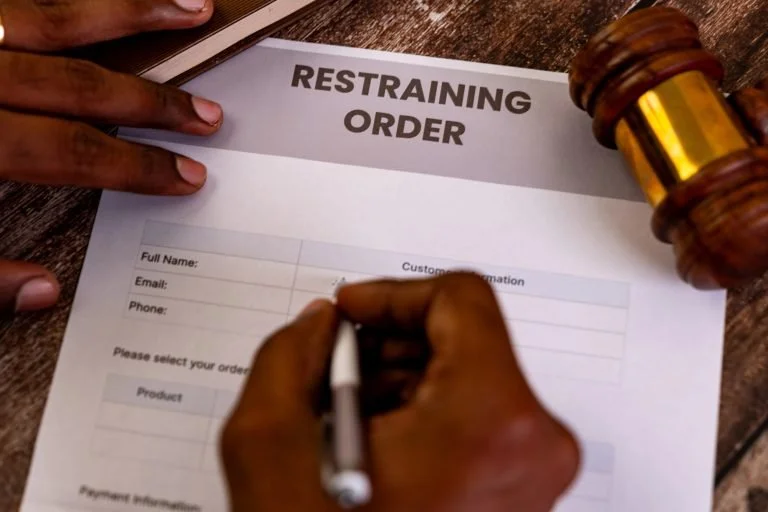
    Temporary and Final Restraining Orders are very serious. Unlike most other states, a Final Restraining Order (FRO) in New Jersey does not expire. It requires that a Defendant be fingerprinted and may appear on a background check. It prohibits a Defendant from owning a firearm. As a result, it may impact a Defendant’s employment. A violation of an FRO may lead to criminal charges, including jail time.

                Because the consequences of an FRO are so serious and permanent, there are many requirements for the Plaintiff to prove in order to be awarded an FRO. Unlike many other areas of the law, there are only two outcomes to an FRO trial – either the FRO is granted or the FRO is denied. If denied, the Temporary Restraining Order (TRO) is vacated. This means that the protections offered in the TRO are no longer present. A Court cannot order a partial FRO or a temporary FRO. It is an all or nothing endeavor.

                Since there presents a risk to each party, sometimes it can be appropriate to enter into a civil restraints’ agreement. This agreement may be negotiated between the parties and include provisions that protect the Plaintiff. The Defendant can be prohibited from coming to the home and workplace of the Plaintiff. The Defendant can be restrained committing future acts of domestic violence and communicating with the Plaintiff. Additional restrictions may be added as appropriate for each case.

                Importantly, a civil restraints agreement is not a Court Order. If you have another case with the other party, such as a custody matter or a divorce matter, you can convert the agreement into an order to be entered in that case. Otherwise, the agreement will remain a contract between both parties. It can be enforced just like a contract.

                Entering into such an agreement would replace an FRO, such that the underlying TRO would be dismissed. As such, you should carefully weigh your options, including the risks and benefits of such an agreement, before deciding on this strategy. We can help. Please call our office to schedule a consultation to discuss whether civil restraints are right for you.

    Our offices are located at 12 Roszel Rd., Suite C205, Princeton, NJ 08540. Our phone number is 609-919-1600.

  • By Kate Lyons, Esq. February 17, 2024

    If you have been served with a Temporary Restraining Order (TRO), you may be worried, confused, and upset. First, you must follow the restrictions in the TRO. You cannot contact the Plaintiff. You cannot ask someone else to contact the Plaintiff. If you are prohibited from going to the Plaintiff’s home or workplace, you must stay away from both locations. You should post about the Plaintiff or any of the allegations on social media. If you violate the TRO, even with the best of intentions, you may be subject to criminal charges and jail-time.

    Next, the TRO will include a hearing date. You must be present on that date and prepared to defend against the allegations in the TRO. If you do not appear on that date, the Judge is able to grant the FRO against you without giving you an opportunity to defend yourself. If you have a conflict, you should contact the Court immediately. Until you receive a new date from the Court, you must assume a request to postpone (adjourn) the hearing has not been granted and you must attend on the date given.

    At your hearing, you should be prepared to present your explanation of the incidents alleged, including any testimony and documents that contradict Plaintiff’s allegations. However, you can only testify to what you directly saw, heard, or experienced. If you would like to present testimony of an incident that you did not directly experience, you will need to have someone who did see or hear the incident testify at your trial. You should make sure that they attend your hearing. Similarly, if you have documents that contradict Plaintiff’s allegations, you should bring them with you at the time of your hearing. Like testimony, you can only present those documents that you made or can otherwise identify. A good example of this is a police report. To admit a police report into evidence, you will need the police officer who wrote the report testify. You should make sure that the police officer attends the hearing with you.

     The FRO trial is just that – a trial. It is very serious and should not be taken lightly. We can help. Please contact our office to schedule a consultation to discuss how we can assist you in defending against the TRO.

  • By Jilliam Kalyan, Esq. February 14, 2024

    If you have been served with a Temporary Restraining Order (TRO), you may be worried, confused, and upset. First, you must follow the restrictions in the TRO. You cannot contact the Plaintiff. You cannot ask someone else to contact the Plaintiff. If you are prohibited from going to the Plaintiff’s home or workplace, you must stay away from both locations. You should post about the Plaintiff or any of the allegations on social media. If you violate the TRO, even with the best of intentions, you may be subject to criminal charges and jail-time.

    Next, the TRO will include a hearing date. You must be present on that date and prepared to defend against the allegations in the TRO. If you do not appear on that date, the Judge is able to grant the FRO against you without giving you an opportunity to defend yourself. If you have a conflict, you should contact the Court immediately. Until you receive a new date from the Court, you must assume a request to postpone (adjourn) the hearing has not been granted and you must attend on the date given.

    At your hearing, you should be prepared to present your explanation of the incidents alleged, including any testimony and documents that contradict Plaintiff’s allegations. However, you can only testify to what you directly saw, heard, or experienced. If you would like to present testimony of an incident that you did not directly experience, you will need to have someone who did see or hear the incident testify at your trial. You should make sure that they attend your hearing. Similarly, if you have documents that contradict Plaintiff’s allegations, you should bring them with you at the time of your hearing. Like testimony, you can only present those documents that you made or can otherwise identify. A good example of this is a police report. To admit a police report into evidence, you will need the police officer who wrote the report testify. You should make sure that the police officer attends the hearing with you.

     The FRO trial is just that – a trial. It is very serious and should not be taken lightly. We can help. Please contact our office to schedule a consultation to discuss how we can assist you in defending against the TRO.

  • Fact or Fiction? Common Misconceptions About the Divorce Process.

    ByDCS StaffDecember 19, 2024

    Divorce can be a complex and emotional process, often clouded by misconceptions. In New Jersey, understanding the truth behind these myths can help you navigate your divorce more effectively.

    1. Myth: You must prove wrongdoing to get a divorce.
      Fact: New Jersey allows for “no fault” divorces, meaning you can file for divorce without proving that your spouse did anything wrong. Simply stating irreconcilable differences is sufficient. While you are permitted to claim and prove a fault, such as adultery, generally it has little to no impact on the outcome of your case.

    1. Myth: All assets are split 50/50.
      Fact: New Jersey follows equitable distribution laws. This means assets are divided fairly, but not necessarily equally. Factors like the length of the marriage and each spouse’s financial situation are considered when dividing assets and liabilities between the parties.

    1. Myth: Child support is automatic after divorce.
      Facts: While child support is common, it’s not automatically granted. Parents must agree on terms or seek court intervention to establish support amounts based on income and the amount of time each parent spends with the child. Child support can be paid by either party, and can change over time.

    1. Myth: You can’t get divorced if you don’t agree.
      Fact: You can still proceed with a divorce even if your spouse does not agree or refuses to participate. New Jersey allows one party to file for divorce unilaterally and move for a default when necessary.

    1. Myth: Divorces takes years to finalize.
      Fact: While some divorces can be lengthy, everyone’s situation is unique and many couples are able to come to an agreement much quicker.

    2. Myth: Mediation isn’t a viable option for a divorce.
      Fact: Mediation is often an effective and less adversarial alternative to litigation.  It works best when both parties understand their legal rights.  At it’s best, it allows couples to negotiate terms cooperatively, based on the uniqueness of their family. Mediation works by bringing both parties together with an experienced third party with a shared goal of reaching a resolution that both parties can live with.

    By dispelling these myths, you can approach the divorce process with clarity and confidence.  As with any legal issue, you should consult an attorney about your specific circumstances.

  • ByJillian Frost Kalyan, Esq.December 19, 2024

    If you are receiving alimony or paying alimony, the issue of cohabitation may be important to your legal rights.  If the cohabiting person is receiving alimony. The New Jersey alimony statute, N.J.S.A. 2A:34-23, direct addresses cohabitation using factors. Understanding these factors can help individuals navigate the complexities of their legal rights and obligations.

    • Shared Financial Responsibilities: Courts will evaluate whether the parties have combined finances. This includes shared bank accounts, joint investments, or any other financial commitments that demonstrate a merging of financial lives. The more intertwined their finances are, the stronger the claim that there is or was cohabitation.

    •  Interdependence: This factor assesses the extent to which the individuals rely on one another financially and emotionally.  Evidence of shared expenses, such as utility bills or joint bank accounts, can indicate interdependence and strengthen a claim of cohabitation.

    • Public Presentation: How the couple presents themselves to the outside world can be significant. This factor considers whether they publicly act as a couple, such as attending social events together, spending time with family as a couple, appearing together on their social media accounts, or introducing each other as partners. Public acknowledgement, especially at family events and social media can bolster a claim of cohabitation.

    • Living Together: This factor examines whether the individuals share a residence. To establish cohabitation, the court looks for a physical arrangement where both parties live together as a couple. This one seems obvious, but in reality, it is not required that the parties share a residence to establish cohabitation. Parties can be cohabiting for the purposes of support and still maintain separate residences.

    • Duration of the Relationship: The length of time the couple has cohabited is critical. A long-term relationship may suggest a significant relationship that would be more likely to impact alimony, while a brief or casual dating relationship is unlikely to have the same legal consequences.

    • Emotional and Intimate Relationship: The nature of the relationship is critical. Courts look for evidence of a romantic relationship, including shared commitments, affection, and intimacy when assessing whether cohabitation is present. This factor helps establish the legitimacy of the partnership beyond mere friendship or companionship.

    • Household Chores: This factor examines whether the parties act like a couple within their respective or shared residence. If there exists evidence that one or both parties take on routine household work for the benefit of the other, this indicates a partnership relationship and can help establish cohabitation.

    • Enforceable Promise of Support: Lastly, courts will consider whether one party made a written and enforceable promise to support the other.

    Understanding these factors is essential for individuals navigating cohabitation issues in New Jersey. If you worry that cohabitation could affect your alimony, or if you believe you are paying alimony to someone who is cohabiting, don’t wait to assess your situation with an attorney, who can provide clarity and guidance tailored to your specific situation.  Knowledge of the legal issues can empower you to make informed decisions about your legal rights and responsibilities.

    Jillian Frost Kalyan, Esq.
    Dennigan Cahill Smith, LLC

  • ByNicole Huckerby, Esq.December 19, 2024

    Since 2013, same sex couples have been able to marry in New Jersey.  But same-sex marriages are not immune to the difficulties facing other marriages, and in the event of a divorce, same sex couples will encounter the same divorce process as heterosexual divorces in New Jersey.  There are, however, certain things to consider if you are in a same-sex marriage and contemplating divorce in New Jersey.

    1. Is a child adopted?  A child or children of a same sex couple may have been adopted by only one parent, or may be the biological child of one parent.  This can be troubling to both parents.  Although one partner may not be biologically related to the child, he or she likely maintained the role of parent to the child and will seek parental rights. What does this mean in a divorce as it relates to custody and parenting time or child support?

    2. What if the marriage-like relationship started before the right to marry?  Same sex couples sometimes face unique issues as it relates to support and the division of property.  In dividing marital assets and considering issues of support, New Jersey focuses on the date of marriage as a starting point for assessing premarital and marital assets.  This could cause complexities for a divorcing couple who resided together and combined finances for sometimes decades prior to being able to marry in 2013.

    The family law attorneys at DCS are ready to assist you in understanding your rights and in guiding you in a manner that best protects your interests.

  • By Nicole Huckerby, Esq.December 19, 2024

    A prenuptial agreement, “Prenup” or “PNA,” is an agreement that is entered into between you and your intended spouse before marriage. Typically, it spells out certain rights upon divorce, death, or separation.


    Prenuptial agreements can be effective planning tools that can aid you in avoiding disputes and costly litigation in the unfortunate event of divorce. By fixing your interests, rights and claims, the agreement can serve as an effective way to build predictability of outcomes. Sometimes individuals in second marriages want to find ways to protect their children from other relationships financially. There are also financial reasons to protect assets if one partner has significantly more assets than the other, if one spouse is an active manager of his or her own investments, or importantly, if there is a small business involved. On the other side, if one partner is bringing in substantial debts to a marriage, this may also be considered.


    But beware…While many couples today recognize the benefits of a prenup, if not communicated carefully, it could cause relationship problems. For this reason (and others) we recommend careful communication about these issues, and when there’s potential trouble, prompt communication or mediation to come to an amicable agreement before it gets out of hand.


    Don’t do this alone. It is especially important to retain an attorney who is skilled in drafting such agreements which are governed by the Uniform Premarital and Pre-Civil Union Agreement Act, N.J.S.A. 37:2-31 to 41. The enforceability of such Prenups is dependent upon several factors such as: voluntariness; a full and fair disclosure of each party’s earnings, property, and financial obligations; consultation with independent legal counsel (absent a written waiver of same); and a writing executed by both parties.


    The family lawyers at DCS are experienced in negotiating and drafting prenuptial agreements as well as aiding clients in a constructive way that is sensitive to preserving the relationship. Our attorneys have experience on the other side as well; in moving to set aside agreements that do not meet the statutory requirements. We recognize that your circumstances are unique, as is every relationship. We are here to help you in protecting your interests.

Schedule a consultation

Finding the right lawyer and firm is critical. And partnering with someone you feel comfortable with and trust, is everything. We’ve been doing this for a long time and understand just how important the an open and honest partnership is. Fill out the form to start the conversation.

  • Whether you are a new or existing client of the firm, Denigan Cahill Smith cannot represent you on any new matter until the firm has made a determination that there is no conflict of interest and that it is willing and otherwise able to accept the new engagement. Unless and until Denigan Cahill Smith has informed you it is willing and able to accept your new matter, do not send the firm any information or documents that you consider private or confidential.


Dennigan Cahill Smith, LLC
12 Roszel Road
Suite C205
Princeton, NJ 08540